

5 Reasons Ice Packs Won't Fix Your Child's Heel Pain (And What 30,000+ Sports Parents Did Instead)
Your kid comes off the field limping. Again. You see it before they say a word — that look when the coach puts someone else in their spot.
You've done everything right. Ice after every practice. Rest on the hard weeks. Heel cups from Amazon. Maybe a physio appointment at $60 a pop. And it keeps coming back.
Not because you missed something — but because the standard advice doesn't address what's actually happening inside your child's heel during sport.

Ice Numbs the Pain. It Doesn't Fix What's Causing It.
Ice is reactive. It reduces inflammation after the damage is already done — but the second your child laces up again, the same mechanical stress returns in full force.
Here's what's actually happening: the heel bone is growing faster than the Achilles tendon can keep up with. That mismatch creates traction on the growth plate with every stride, every jump, every cut. Ice does nothing to address that mechanical pull. It can't. It's centimeters away from where the problem lives.
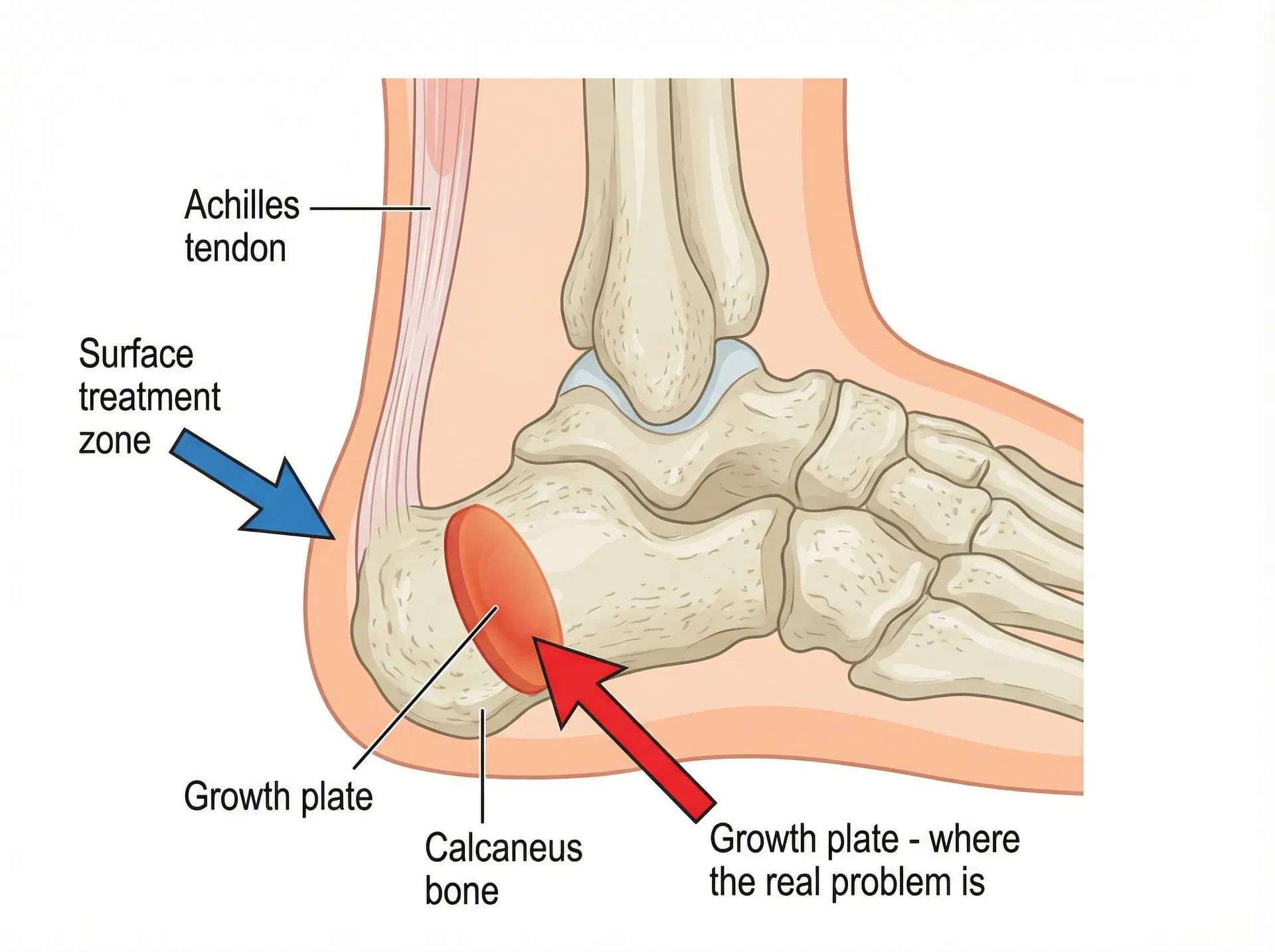
The growth plate (calcaneal apophysis) sits deep inside the heel bone. Ice contacts the skin surface. It's like putting a cold cloth on a bruise you keep walking into. The relief is real — but it's temporary by design. Twenty minutes of numbness, then the same limp at warm-ups the next day.
"Just Rest" Sounds Simple. It Doesn't Solve Anything.
Rest works in theory. But most kids don't truly rest — especially a 10-year-old in the middle of travel soccer season. And even when they do sit out for weeks, the pain restarts within days of return because nothing changed mechanically.
For families mid-season, "rest" means 6–8 weeks on the bench. That's tournament absences. Skill regression. A kid who's emotionally wrecked watching teammates play without them. And a parent who followed the advice perfectly — and it still didn't stick.
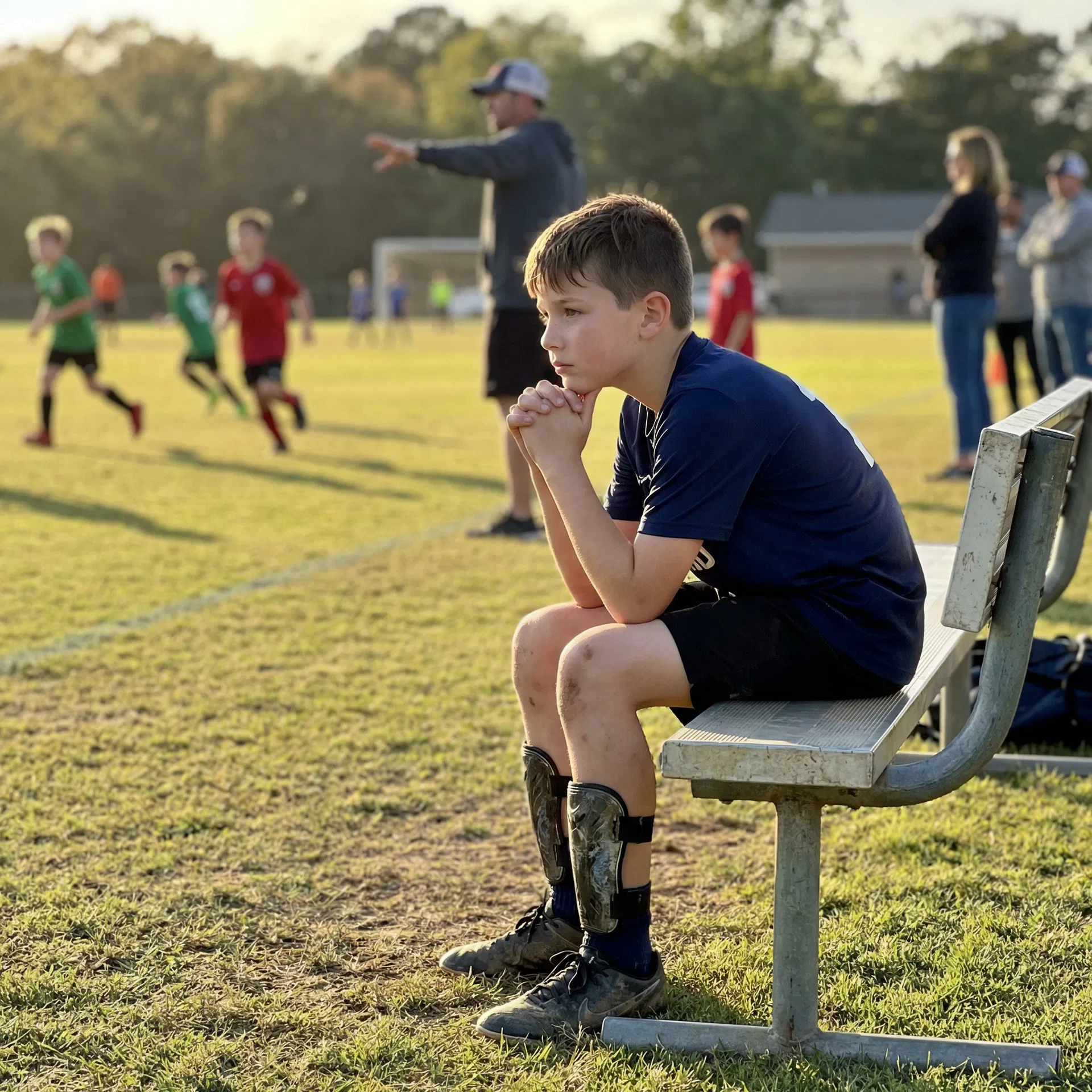
The goal isn't six weeks off. It's keeping your child active while reducing the load on the growth plate during the movements that actually cause the damage. Rest alone can't do that — it just delays the next flare-up.
Heel Cups Were Designed for Adults. Your Kid's Feet Are Different.
Most heel cups are adult products scaled down. They don't account for the anatomy of a growing foot or the specific location of Sever's pain at the posterior heel. They cushion — but they don't stabilize during movement.
They also shift around in cleats. Within ten minutes of play, most gel inserts have migrated to the wrong spot. There's a reason parents report buying "every heel cushion on Amazon" with limited results — the product category wasn't designed for this problem.
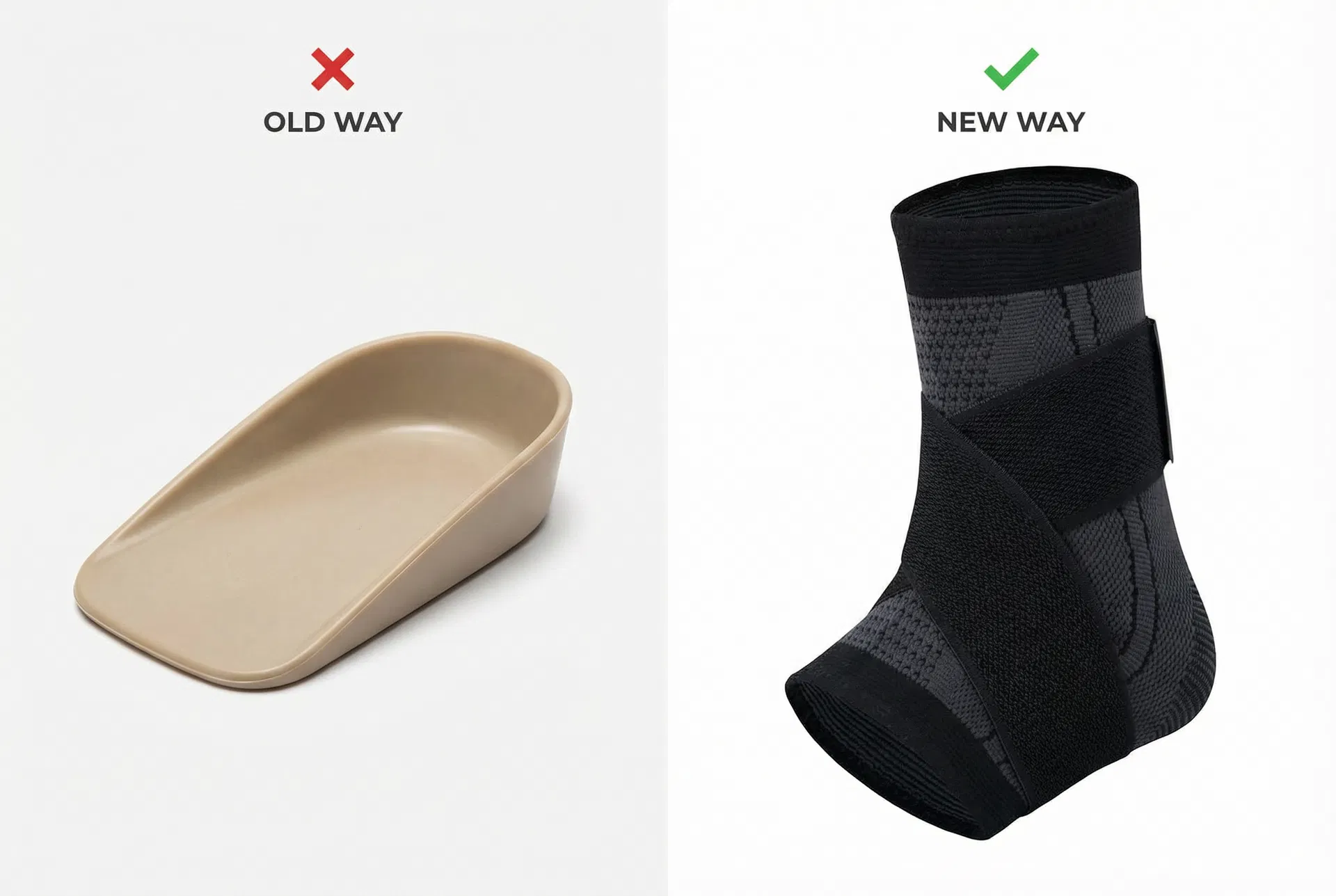
A growing foot needs something that moves with it — not something that slides around inside the shoe and addresses the wrong part of the problem.
What 30,000+ Sports Parents Are Doing Instead
After exhausting ice, rest, heel cups, and physio appointments, a growing number of parents in youth sports communities landed on the same answer — not another insert, not another brace, not more time on the bench.
A compression sleeve built specifically for growing athletes. Designed around one insight: the heel needs support during activity, not just after.
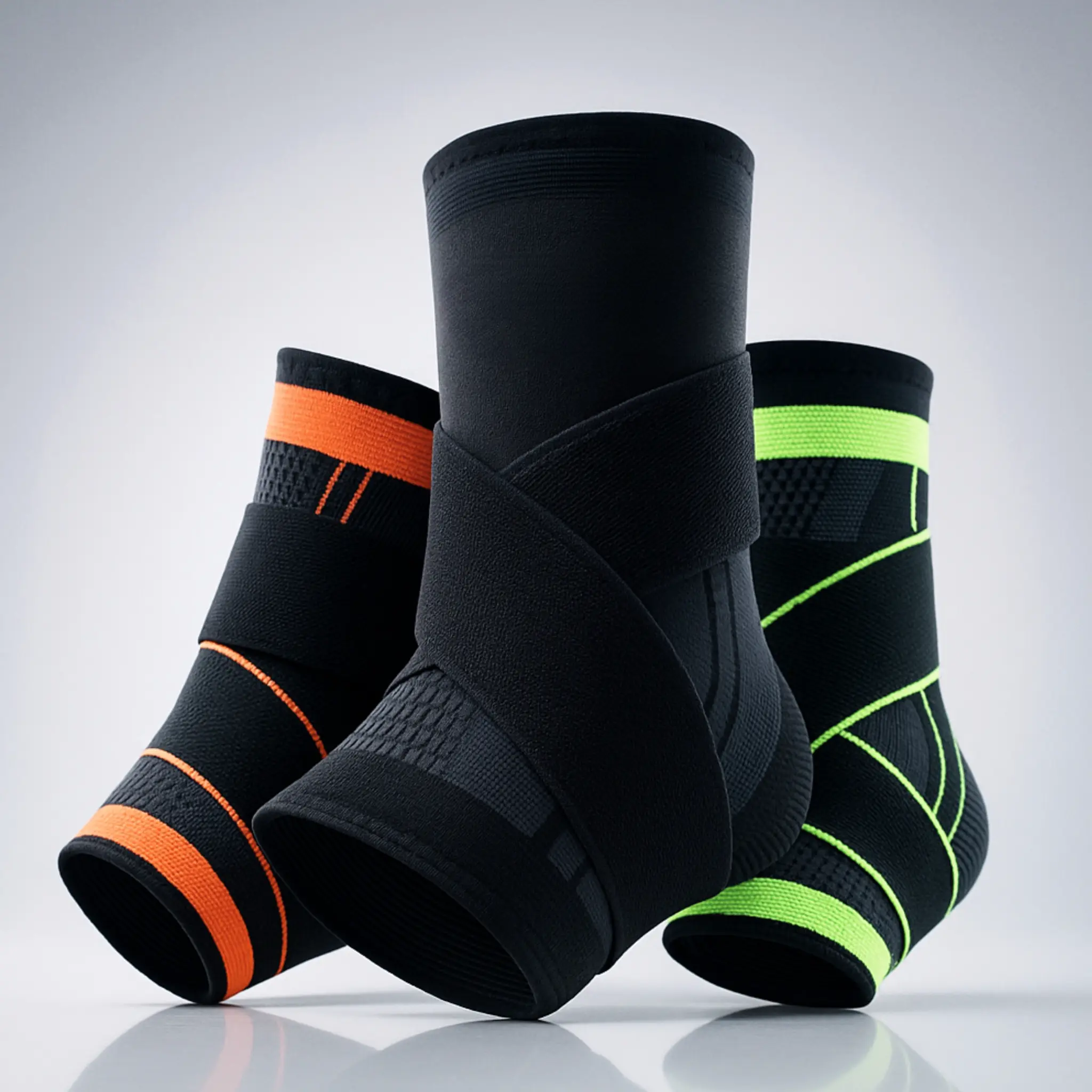
RecoverX Youth Heel & Growth Plate Support Sleeve
The sleeve youth sports parents are switching to.
- Youth-specific sizing — not a scaled-down adult product
- Heel-Lock compression targets the calcaneal growth plate during movement
- Ultra-slim profile — fits in soccer cleats, basketball shoes, and spikes with zero bulk
- Kid-approved design — they actually wear it without being asked twice
Less than one PT copay
30-day money-back guarantee · Free shipping on 2x Sleeves · Ships same day
Hundreds of families ordered this week — most during tournament season.
The Real Damage Happens During Movement — Not After
This is the point most parents miss entirely. The pain your child feels after practice is the symptom. The damage accumulates during activity — every stride, every sprint, every hard cut on the field.
The Achilles tendon pulls on the back of the heel with every push-off. In a growing child, the growth plate hasn't fully hardened yet — it's softer, more vulnerable to that repeated mechanical stress. That's Sever's disease: not one bad play, but hundreds of normal movements adding up.
Ice, rest, and heel cups all address what happens after the damage is done. None of them change what happens during those 60 minutes on the field. The growth plate has already taken the hit by the time the ice pack comes out.
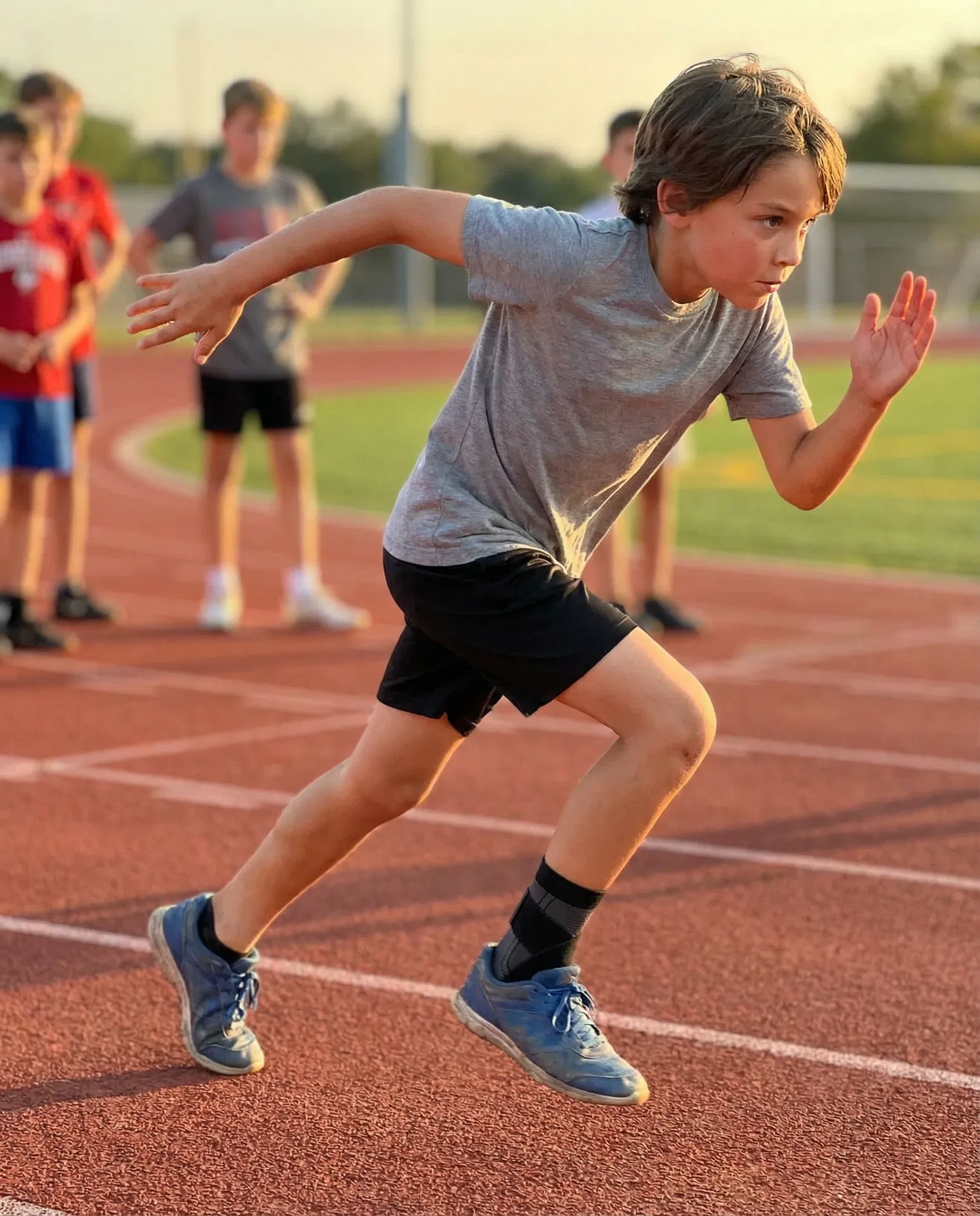
What's needed is something that provides active support while the child is moving — something that reduces the traction force on the growth plate during the exact moments that cause the most stress. Not before. Not after. During.
None of It Works If Your Kid Won't Wear It
Here's the uncomfortable truth no product page tells you: compliance kills most solutions before they get a chance to work.
Bulky braces get ripped off in the car. Stiff orthotics get "forgotten" in the locker room. Gel inserts that shift around get pulled out mid-game. If your child won't wear it — consistently, without a fight, through an entire practice — it doesn't matter how well the science works.
The compliance test isn't "does it work in a lab?" — it's "will a stubborn 10-year-old put this on without being asked twice?"
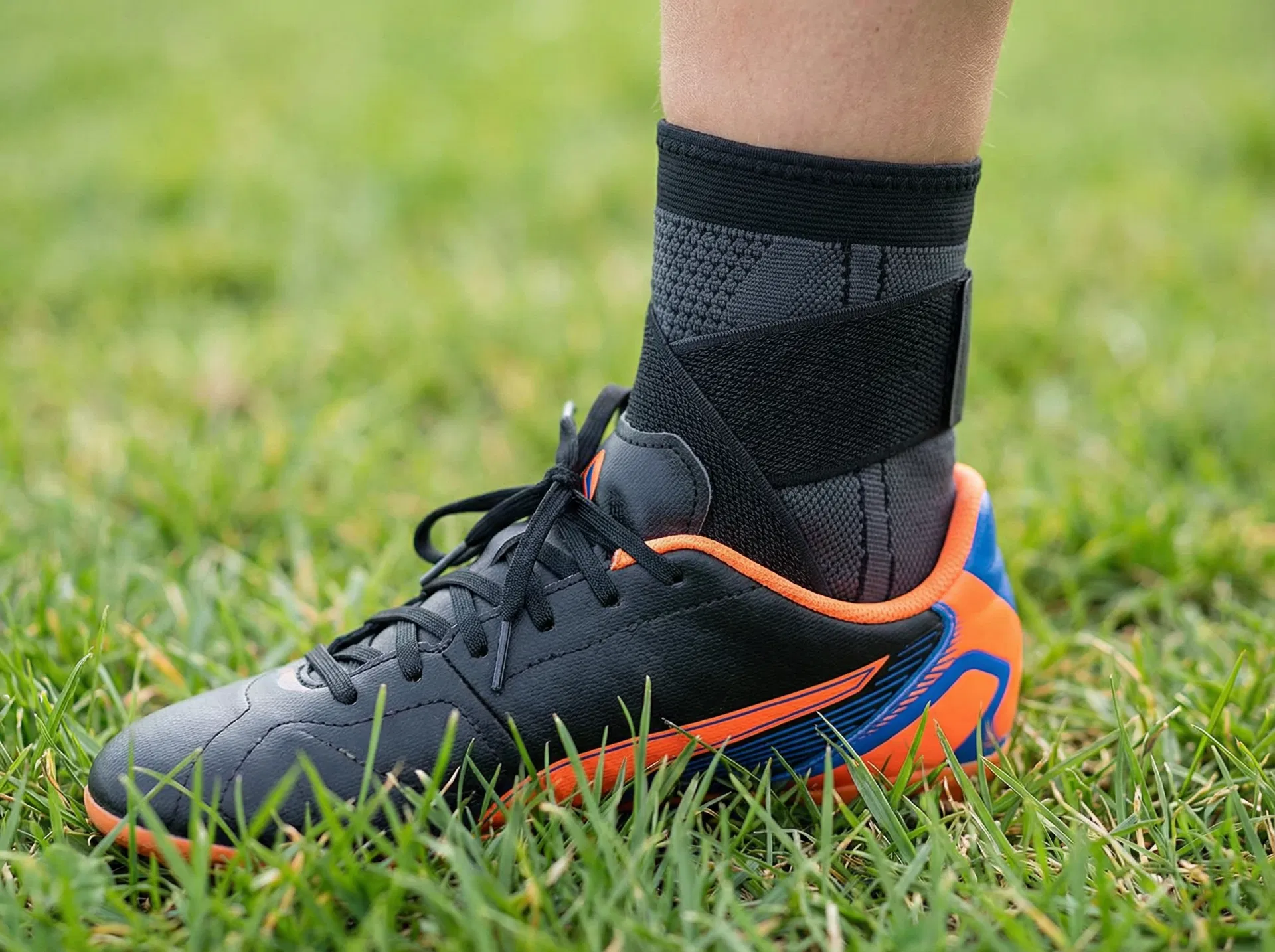
For a solution to actually deliver results, it has to clear a bar that most medical devices fail: an 11-year-old has to want to put it on. It has to fit inside their cleats without any bulk, any slipping, any complaints to the coach. Design matters as much as function.
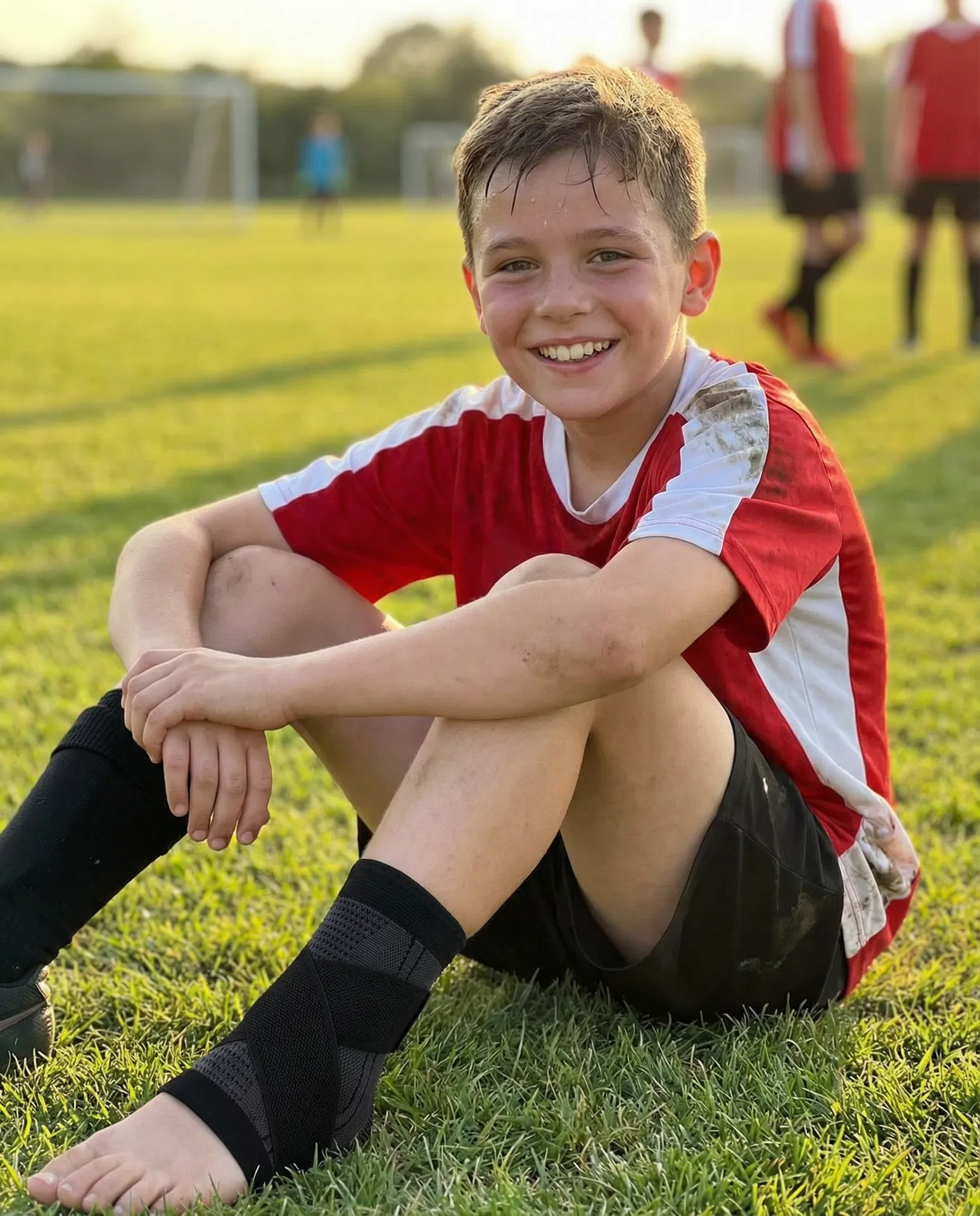
Starting at $34.99 — less than one PT copay
Get the RecoverX Sleeve →Free shipping on orders over $45 USD · 30-day money-back guarantee
30-day money-back guarantee · Free shipping on 2x Sleeves